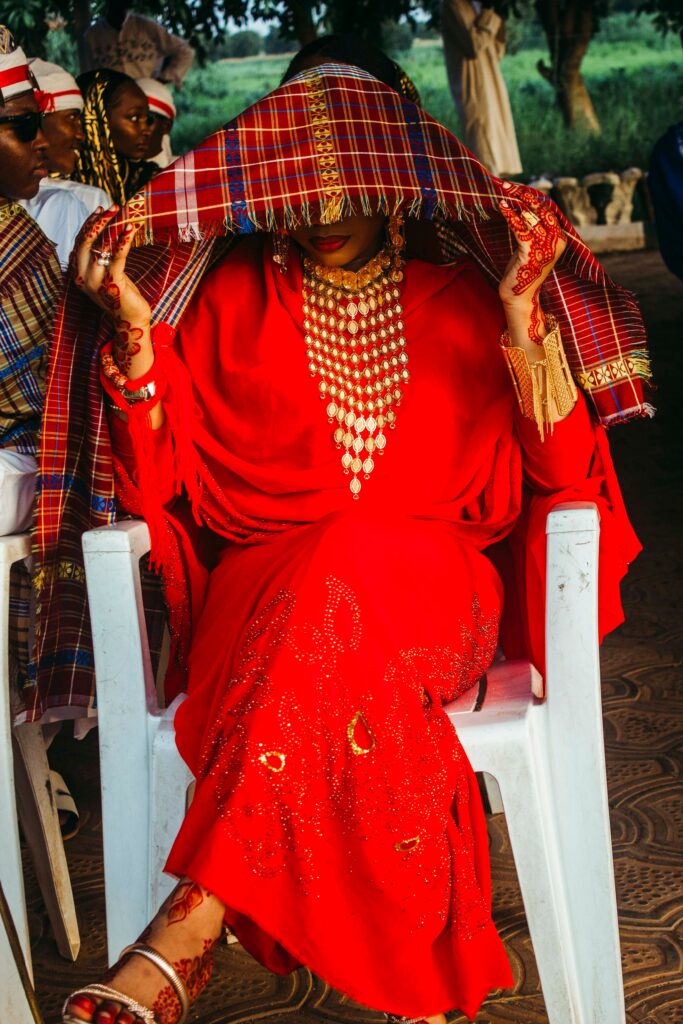
I have been thinking about bride price, not because I am getting married tomorrow, Nigeria and I already have one complicated relationship; I am not looking for a second one immediately.
But the subject keeps finding me.
A conversation here.
A marriage story there.
A woman quietly saying, “He changed after the wedding.”
A man loudly saying, “I paid your bride price.”
And every time I hear that sentence, I pause because it is a fascinating sentence. Not the words themselves, the assumption behind them.
“I paid your bride price.”
And therefore… what exactly?
What comes after that sentence?
Ownership?
Authority?
Control?
Exclusive rights?
A lifetime subscription?
I genuinely want to know, because sometimes I wonder whether bride price is one of the most misunderstood cultural practices in Africa.
Or perhaps it is one of the most misused, because if you listen carefully to some conversations about marriage, you would think bride price is the receipt proving ownership of another human being.
This is strange because the woman in question is still a person.
She still has dreams.
She still has preferences.
She still has a personality.
She still has a life she would like to live.
The bride price did not suddenly turn her into furniture, yet sometimes our marriages seem to function as though it did. I wonder how we got here.
Perhaps it starts with how many African boys are raised. Many of our mothers, with the purest intentions and the deepest love, sacrifice everything for their sons.
Everything.
Their comfort.
Their ambitions.
Their rest.
Their happiness.
Some of these women practically disappear into motherhood. They live for their sons, breathe for their sons, and build their entire existence around their sons. Again, this comes from love.
But I also wonder if some boys unconsciously grow up expecting this level of devotion from all women, because if your first experience of womanhood is a mother who consistently puts herself last for your benefit, perhaps you begin to believe that this is simply what women do.
Perhaps you begin to think:
Women exist to nurture me.
Women exist to support me.
Women exist to sacrifice for me.
Women exist to make my life easier.
Then one day you marry an educated, self-aware woman who says:
“I love you, but I also love myself.”
“I support you, but I also have dreams.”
“I care for this marriage, but I also want a life.”
And suddenly everybody is confused because this is not the script.
The script said the woman would quietly disappear into service.
The script said she would endlessly give.
The script said her happiness would naturally flow from your happiness.
The script never prepared some men for the possibility that she, too, would like a fulfilling life.
I think this is where many marital conflicts begin. Not because one person is evil, not because one person is selfish, but because two completely different ideas of marriage have entered the same house.
One person believes: “We are partners.”
The other believes: “I am the leader, and your primary role is to support me.”
One person says: “We should both thrive.”
The other says: “My thriving is the family’s thriving.”
One person wants a companion, the other wants a helper. Neither says these things on the wedding day, of course. Nobody stands before family and friends and announces:
“I intend to subtly become your entire personality.”
No.
These things reveal themselves gradually, usually after the rice has been eaten and the pictures have been framed.
Then comes one of the most famous lines in African marriages: “I paid your bride price.”
Again, I ask: And therefore… what? Because I am trying to understand.
Was the bride price a token of appreciation to the family?
A cultural rite?
A symbolic joining of families?
Or was it an invoice?
The way some people speak about it, you would think they purchased an appliance, and that word…purchased…is exactly where I get uncomfortable.
This is because ownership and love have never been particularly compatible.
You can own a car.
You can own land.
You can own a house.
You cannot own another adult. At least, I don’t think you should.
Yet I understand why some men think this way, truly.
I think it is partly cultural.
Partly historical.
Partly inherited.
There is also the argument that unmarried women traditionally obey their fathers. So once she marries, leadership transfers from father to husband. I have heard this argument many times, and perhaps there is some cultural truth in it. But even then, I struggle with the leap from leadership to ownership, because those are not the same thing.
A leader guides.
A leader protects.
A leader serves.
An owner possesses.
The difference is enormous.
The problem begins when a husband sees himself primarily as an owner. Because what does property do?
Property serves the owner’s interests.
Property does not negotiate.
Property does not have personal ambitions.
Property does not wake up one day and decide it wants more from life.
But wives are not property.
They are people.
Complicated, evolving, imperfect people.
The same way husbands are.
I also think some marriages break down because this reality arrives like an unexpected visitor.
The man cannot understand why she wants more.
The woman cannot understand why he cannot understand.
And both people end up speaking entirely different emotional languages.
Personally, I have more respect for men who are honest.
The men who say:
“I believe the man should lead.”
“I believe the woman should prioritize the home.”
“I prefer traditional roles.”
At least everybody knows the terms and conditions.There is clarity.
The real confusion comes from men who speak beautifully about partnership and equality during courtship, then suddenly discover ancient kingship after marriage.
Yesterday we were teammates, today you are issuing decrees.
How did we get here?
Was there a ceremony I missed?
Did the marriage certificate come with a throne?
Because this switch confuses many women. Not because they dislike leadership, but because they dislike bait and switch.
Say what you believe from the beginning and allow people to make informed choices. Marriage is difficult enough without hidden expectations.
The more I think about it, the more I wonder whether the issue is not bride price itself. Perhaps the issue is what we have attached to it.
This is because bride price, in many African cultures, was never originally intended to mean ownership.
It was symbolic.
A gesture.
A recognition.
A joining of families.
An acknowledgement that a daughter had been lovingly raised and was now beginning another chapter.
Somewhere along the way, symbolism became entitlement, and entitlement has damaged many marriages because entitlement makes sacrifice one-sided.
One person is expected to bend.
One person is expected to compromise.
One person is expected to disappear.
Eventually, people grow tired of disappearing. I think this is why some women leave marriages that others consider “good.”
People ask: “But he provides.”
Is provision the only human need.
Food is important.
Shelter is important.
Financial stability is important.
But so is joy.
So is respect.
So is companionship.
So is purpose.
So is being seen as a whole person.
A woman can appreciate provision and still want fulfillment.
A woman can love her family and still want her own identity.
A woman can be committed and still want happiness.
These things are not acts of rebellion. They are acts of humanity. This brings me to another question.
What does a healthy marriage actually look like?
I do not think it looks like ownership. I think it looks like partnership, not perfect equality in every single thing, life is rarely that tidy. But mutual humanity.
Two people.
Two lives.
Two dreams.
Two sets of needs.
Two individuals choosing to build something together.
A place where sacrifice goes both ways.
A place where leadership does not erase personhood.
A place where provision is not used as currency for control.
A place where love does not demand self-erasure.
A place where both people can become more fully themselves, not less.
Perhaps that is the real goal.
Not ownership.
Not dominance.
Not submission competitions.
Just two people helping each other live meaningful lives.
Maybe I am idealistic.
Maybe I have read too many books.
Or perhaps I simply believe that marriage should feel less like acquisition and more like companionship. Because at the end of the day, if your spouse must abandon herself entirely so that you can become yourself fully, then perhaps the arrangement deserves another look.
Anyway…
I still think bride price is beautiful. I just don’t think it should come with a receipt of ownership, and maybe, just maybe, our marriages would breathe easier if more of us remembered that.
– Ria
Read the next rant here: Ria: What Happens When You Build Everywhere Except Home?