Dear Diary,
There are moments when a Nigerian party stops being an event and becomes an ecosystem, today was one of those moments.
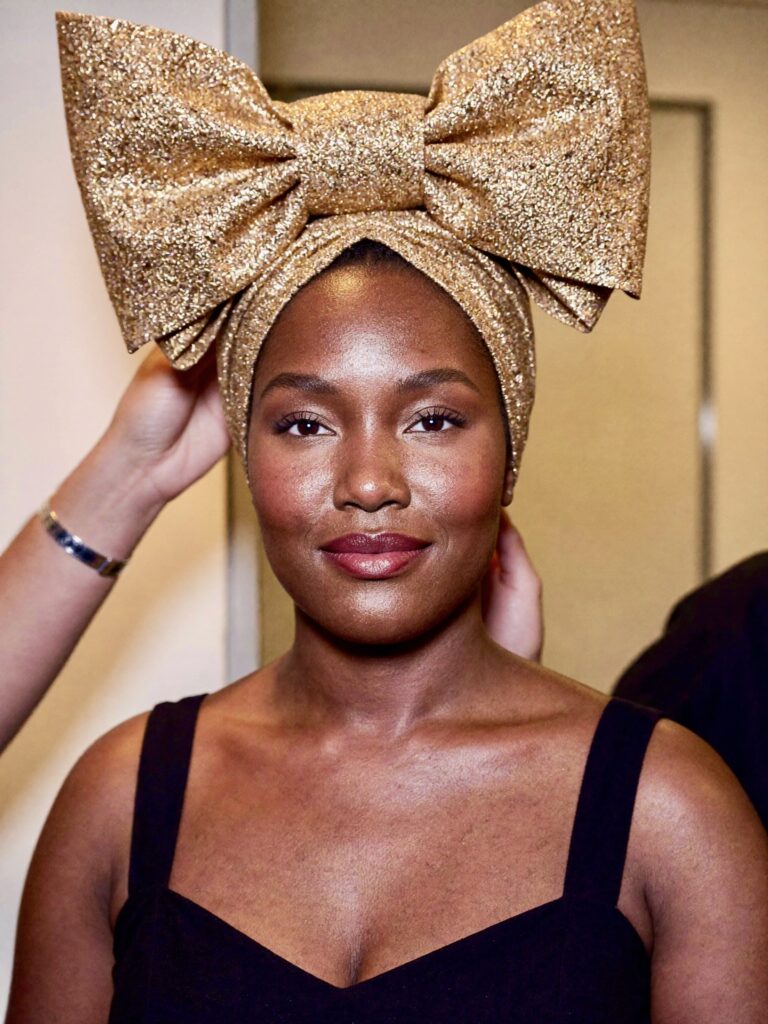
As I am writing this, my feet hurt, my gele is somewhere in another room, someone’s child has claimed my phone charger, there are approximately seventeen coolers of food in circulation, and I have not thought about work once. This may be the most shocking development of all.
Chief Suleiman Ibrahim’s eightieth birthday.
Patriarch.
Businessman.
Family legend.
Producer of an alarming number of children.
At this point I am convinced my uncle views population growth as a personal responsibility. His compound has spent the last three days transforming into a small village.
Canopies.
Generators.
Caterers.
Plastic chairs.
Extra chairs for unexpected guests.
Extra chairs for the guests those unexpected guests will inevitably bring.
People arriving from everywhere.
Relatives I had not seen in years.
Relatives I did not know existed.
Relatives introducing themselves through complex family connections requiring diagrams to understand.
A typical Nigerian family gathering.
But before all of that, there was yesterday, and yesterday began with a small victory.
After my unfortunate exchange with Jemima, I spent most of the night replaying the conversation in my head. The old version of me would have focused entirely on why I was right.
The new version, or at least the version currently under construction, forced me to consider something else. Perhaps being tired did not make me wrong, but it did not make me kind either. That realization was irritating, mostly because it was true.
So when I woke up yesterday morning, I made an effort. Amina was the first person awake.
Just 10 years old and the eldest, she is the book worm of the family. I found her sitting quietly in the sitting room reading a novel. The sight immediately made me uncomfortable, because she looked exactly like I did at her age, which felt unfair.
“You read during holidays?”
She looked up.
“You work during holidays.”
A fair point.
The child is dangerous.
Mariam, the family social butterfly joined us shortly after, bringing her huge energy cramped into her 7 year old body jumped.
Followed by Khadijah, who launched herself onto the sofa like a small, enthusiastic missile. The baby of the house at age 5.
Within thirty minutes, all three girls had somehow convinced me to make them breakfast specifically to their taste.
Then another conversation.
Then another story.
Then another game.
Time disappeared, and unexpectedly…
I enjoyed it.
Even more unexpectedly, I apologized to Jemima.
Simply.
“I was tired yesterday.”
She looked surprised, then relieved, and then suspicious. Obviously, I do not apologize often, an accusation I cannot completely deny.
Our mother looked happier than both of us, which was slightly embarrassing. Parents should not derive this much satisfaction from conflict resolution.
By late morning, Mum remained at home with the girls while Jemima and I headed to Uncle’s compound.
The journey itself was peaceful, the conversation was careful, the kind people have when they are trying to rebuild something fragile.
Neither of us mentioned old arguments.
Neither of us mentioned Taju, her husband.
Neither of us mentioned children.
Neither of us mentioned disappointment.
Instead we talked about food, traffic, the weather, safe topics basically. Sometimes healing begins with ordinary things.
I noticed her husband was nowhere to be seen, and I also noticed she never mentioned him. I decided not to ask. Some silences deserve respect.
The compound was already alive when we arrived. Women moved in every direction carrying trays, supervising vendors, coordinating logistics and solving problems.
Men stood together discussing plans, or appearing to discuss plans. The distinction remains important.
Normally, I would have greeted everyone politely before locating the nearest quiet corner. Then I would have remained there, observing, detached, and waiting for someone to tell me what to do.
Today, however, I decided to try something different.
Participation.
A radical concept.
I joined a group of women arranging gift packs. At first they seemed surprised, possibly because seeing me voluntarily engage in family activities ranks somewhere between unusual and suspicious. But gradually the conversation became easier, then enjoyable, and then genuinely entertaining.
There were stories.
Memories.
Arguments about recipes.
Arguments about weddings.
Arguments about who remembered what correctly.
Family conversations have a remarkable ability to survive without requiring accuracy.
For a while, I forgot to be defensive. Then my uncle’s wives arrived, all three of them, collectively carrying enough curiosity to qualify as an investigative agency.
The questions began almost immediately.
“Zara, how is work?”
“When are we celebrating your own wedding?”
“Have you found someone?”
“Are you being too picky?”
“Time is moving.”
A familiar script.
One I have heard for years.Ordinarily, my blood pressure would have begun responding immediately. Instead I listened, observed, and breathed.
Then came the men.
My uncle returned with several friends and older male relatives.
The conversation shifted.
Soon discussions about upcoming weddings, naming ceremonies and family plans filled the compound. And somehow, as always happens, the spotlight found me.
One elderly uncle shook his head dramatically.
“We need good news from you soon.”
Laughter followed.
Several people joined in.
Suggestions arrived.
Opinions arrived.
Predictions arrived.
Everybody contributing.
Nobody invited.
I felt the familiar reaction rising, the urge to defend myself, the urge to challenge the assumptions, the urge to explain why a woman’s life is not incomplete because she is unmarried, the urge to ask why nobody was interrogating the unmarried men, and the urge to remind everyone that personal choices are exactly that. Personal.
I could feel the words gathering, ready, prepared, and waiting.
Then something interesting happened.
I noticed something.
They were waiting too.
Waiting for my reaction.
Waiting for the debate.
Waiting for Zara to become Zara.
And suddenly the entire situation became obvious.
They were not looking for answers.
They were looking for entertainment.
I refused to provide it.
Instead I smiled, then looked around at the preparations.
“With all due respect,” I said, “there is still too much work left to do.”
I gestured toward the women.
“If you gentlemen continue distracting us, this party may not happen o.”
Silence.
Then laughter.
The women immediately agreed, enthusiastically.
The men attempted resistance, weakly.
Within minutes they had retreated, defeated by their own desire to be served later.
A strategic victory.
No casualties.
Perhaps mindfulness and crisis management are not as different as I once thought.
And now we arrive at today, this moment, the celebration itself.
The music.
The dancing.
The laughter.
The food.
The endless photographs.
At some point this evening I stepped away from the crowd for a moment, just long enough to look, really look at my family.
Children running everywhere.
Elders laughing.
Cousins dancing.
People arguing.
People eating.
People telling stories they have told a hundred times before.
Messy.
Complicated.
Loud.
Imperfect.
Mine.
And standing there, watching all of them, I had to admit something I have spent years avoiding.
I missed this.
Not every conversation.
Certainly not every opinion.
But this.
The belonging.
The history.
The connection.
The feeling of being part of something larger than yourself.
For so long I convinced myself distance was protection. Perhaps it was, but distance is also loneliness, and maybe there is a middle ground.
A way to remain connected without carrying everybody’s burdens.
A way to love people without trying to rescue them.
A way to belong without disappearing.
I was still thinking about this when Zainab appeared, followed by Jemima. Without warning, they grabbed my hands and dragged me back toward the dance floor.
I protested, briefly, then surrendered. And for the next several minutes, surrounded by cousins, sisters, aunties and complete chaos, I danced.
I laughed.
I forgot myself.
And perhaps for the first time in a very long time…that felt like enough.
Until next time,
Zara
P.S.
It turns out mindfulness is significantly easier when accompanied by food, live music and t relatives dancing badly together.
Read the next entry here: Zara Ep 9: The Woman Who Cried Charity