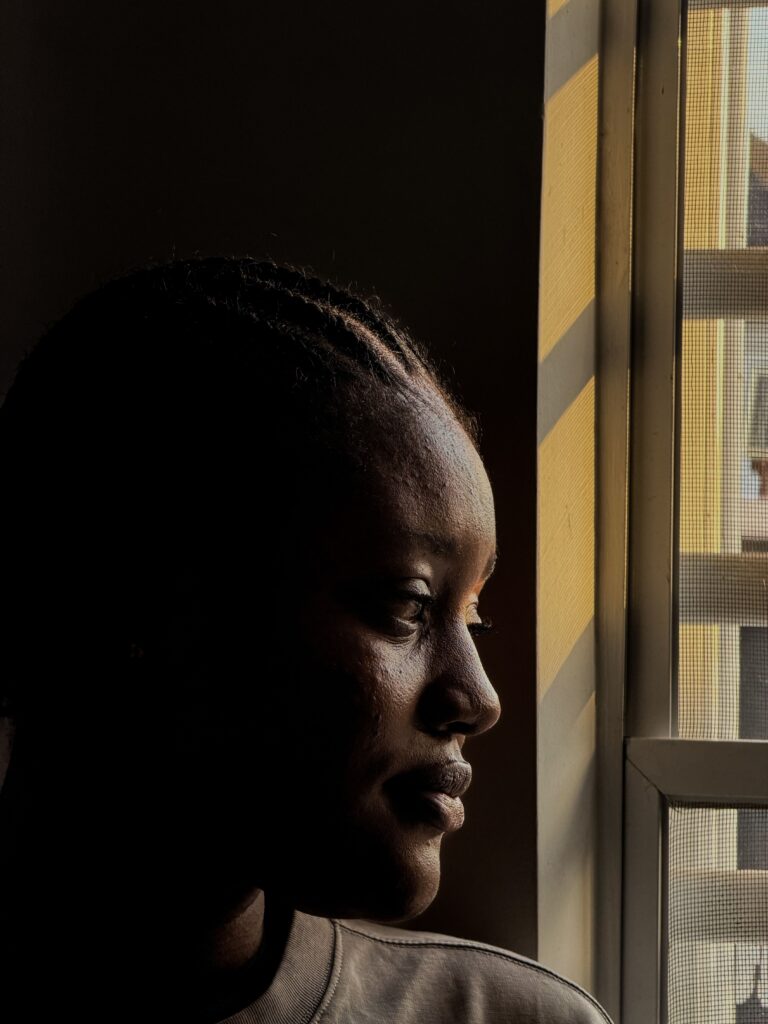
Some people are born brave.
I was not.
I know this because brave people do not spend three days rehearsing a conversation they haven’t even had yet.
Brave people do not practice speeches while sweeping the compound.
Brave people do not whisper arguments to themselves while bathing.
Brave people definitely do not almost faint every time they imagine their father’s face.
Yet for three days, that was exactly what I had been doing.
Practicing.
Repeating.
Preparing.
Failing.
Starting again.
Because there was something I needed to say. And saying it felt like standing at the edge of a cliff.
My name is Jemima. I am sixteen years old. And I want to go to university. That sentence looks very small when written on paper. But in my house, it feels enormous.
My twin brother, Jamil, and I recently completed secondary school. We sat in the same classrooms. Read the same textbooks. Wrote the same examinations. Received our results at almost the same time.
The difference is that everybody already knows what comes next for him. For me, the future feels like a question nobody wants me to ask.
My parents are deeply traditional. Deeply religious. Deeply respected. In our family, sons inherit responsibilities. Daughters prepare for marriage. That is how things have always been. At least according to everyone around me.
The funny thing is that Jamil does not even want university. He has never hidden it. While I spent nights reading novels under my blanket with a torchlight, he spent afternoons following our father around the market.
While I dreamed about lecture halls, he dreamed about learning the family trade. If life were fair, we would simply exchange futures. He would get the business. I would get the education. Everybody would be happy. Unfortunately, life rarely consults me before making decisions.
For days, I told myself I would speak. Then I would see my father and immediately lose my courage. The man is not cruel. But he possesses the kind of authority that makes everyone sit straighter when he enters a room.
His voice never needs to be loud.
His silence is usually enough.
Three times I decided to tell him. Three times I changed my mind.
The first time, he was reading after evening prayers.
The second time, visitors arrived.
The third time, I looked at him and forgot every sentence I had prepared.
I was beginning to suspect I would spend the rest of my life gathering courage without ever using it. Then dinner arrived. And somehow, so did my opportunity.
The four of us sat around the table. The smell of tuwo and miyan kuka filled the room. My mother moved quietly between the kitchen and dining area. My father ate in thoughtful silence.
Jamil was unusually cheerful about something I couldn’t understand. Meanwhile, my heart was behaving like a drum at a wedding ceremony. I could barely taste the food.
I told myself: Not today.
Tomorrow.
Tomorrow is better.
Then another voice answered.
You said tomorrow yesterday.
And the day before.
And the day before that.
I swallowed.
My hands suddenly felt cold. My mouth felt dry. My heart continued its attempt to escape from my chest.
Say it.
Don’t say it.
Say it.
Don’t say it.
I looked at my father.
Then at my mother.
Then at Jamil.
Then back at my plate.
Coward.
The word appeared in my head before I could stop it. And for some reason, that annoyed me. Enough to speak.
“Papa.”
The room changed instantly. I felt it. Three faces turned toward me. I nearly abandoned the entire mission.
“I want to discuss something.”
My mother’s eyes widened. Just slightly, but enough.
A warning.
A plea.
A request to leave dangerous things alone.
I understood all of it immediately.
My father nodded.
“Go ahead.”
My rehearsed speech disappeared.
Every sentence.
Gone.
Vanished.
Wonderful.
I cleared my throat. Then started again. Slowly. Carefully.
“I would like to continue my education.”
Silence. Just waiting. I continued before courage abandoned me again.
“I want to attend university.”
My mother’s hand froze.
Jamil stopped chewing.
My father looked at me for so long that I began mentally preparing my funeral arrangements.
Then he spoke.
“Why?”
It was such a simple question. But I had spent months preparing for it.
“I…ehn…love learning.”
My voice trembled.
“I performed well…ehn… in school.”
Still trembling.
“I want to… study.”
Less trembling now.
“I want to build a career.”
Stronger.
“I believe I can make something meaningful of the opportunity.”
For the first time that evening, I felt my fear begin to retreat. Not disappear. Retreat.
My father listened. Expression unreadable. Then he asked another question.
“What is wrong with marriage?”
I had expected the question. Yet hearing it aloud still frightened me.
“Nothing is wrong with marriage.”
I paused. Choosing each word carefully.
“But I don’t think marriage and education should be enemies.”
The room became very quiet. My mother shifted uneasily. I could almost hear her praying for me. Or perhaps praying for the conversation to end.
My father leaned back.
Jamil watched me with an expression I couldn’t understand.
Pity?
Admiration?
Shock?
Maybe all three.
Then my father asked another question.
And another.
And another.
Each answer made me a little braver.
Each response made me sit a little straighter.
For the first time in my life, I felt like I was not merely speaking. I was being heard. Not agreed with. Not accepted.
But heard.
And strangely, that mattered.
The discussion continued long after the food was gone. Long after the plates became empty. Long after my original courage should have expired.
Then finally, my father folded his hands together.
Looked at me.
Looked at Jamil.
Then looked away.
The room became still.
Completely still.
I knew whatever came next would change everything.
One way or another.
My father took a breath.
Opened his mouth.
And began to speak.
I don’t think I have ever listened so carefully in my life.