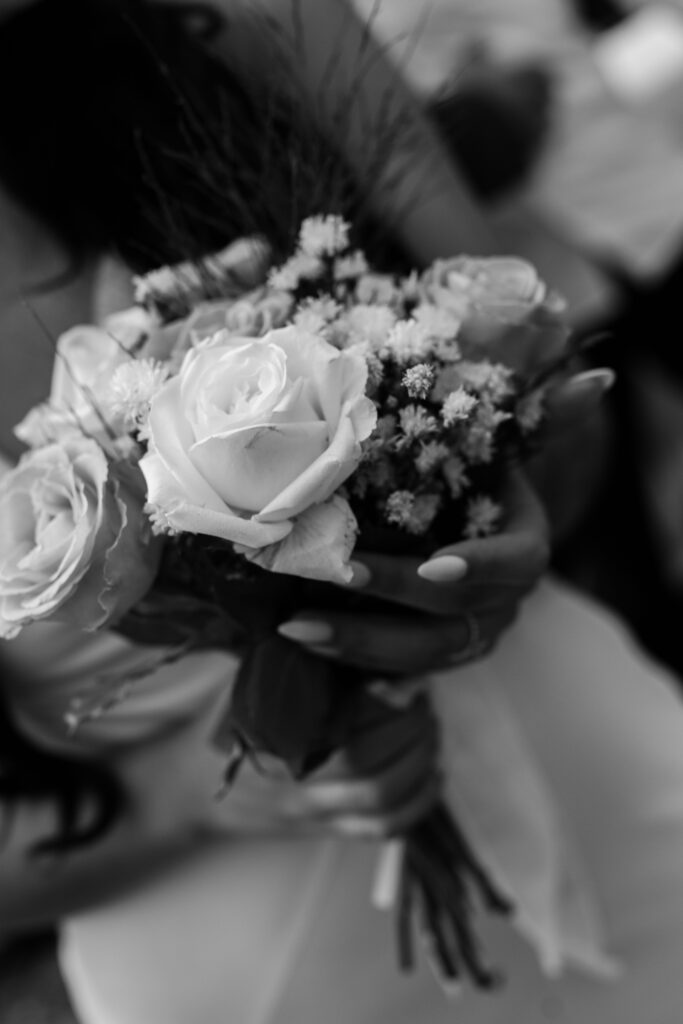
I have never understood why weddings come with so many instructions…Smile…Don’t sweat…Don’t step on your dress…Don’t cry too much…Don’t cry too little…Don’t eat too much…Don’t drink too much…Don’t forget your bouquet…Don’t lose your earrings…Don’t let your makeup artist ruin your face…And, obviously…
Don’t forget to greet dead people.
Yes.
Dead people.
That was the instruction that nearly ruined my morning.
I was standing in my father’s compound, dressed like somebody’s expensive Christmas decoration, when Auntie Ngozi came towards me with the seriousness of a woman delivering classified government information.
“My daughter.”
I looked at her, “Yes, Aunty?”
“Before you leave this compound, you must greet your ancestors.”
I blinked, then looked around, “Which ancestors?”
She stared at me and I stared back.
She lowered her voice, “Your ancestors.”
I nearly laughed. I was already wearing heels that were threatening to amputate my feet. My veil was heavy, my makeup had taken almost two hours, my mother had cried three times, my father had cried twice and was pretending he had dust in his eyes, my cousins were running around, the caterers were shouting, somebody was looking for the ring bearer, my phone had forty-seven unread messages, and this woman wanted me to start looking for dead people.
I smiled, “Aunty, I will greet everybody.”
“No.” She shook her head, “The ancestors first.”
I looked at her, something told me she wasn’t joking. I lowered my voice.
“Aunty…”
“Hmm?”
“They’re dead.”
Her mouth fell open and I immediately regretted saying it. Because the look she gave me suggested I had just personally insulted her entire bloodline.
“My daughter,” she whispered, “do you think because somebody is dead, they have stopped existing?”
I didn’t answer. Because honestly? I didn’t know.
I was raised Christian, educated in modern schools and I had spent most of my adult life moving between Lagos, Abuja and London. I understood culture and I respected tradition, but I didn’t necessarily believe that every ritual my grandmother’s grandmother performed had to follow me into my own life.
Especially on my wedding day. My fiancé was waiting, the photographers were waiting and the guests were waiting. My husband-to-be was probably wondering why his bride had disappeared. I couldn’t stand there discussing metaphysics with Auntie Ngozi.
So I smiled, “I’ll greet everybody.”
She sighed, “You’re stubborn.”
“I get that from my father.”
She laughed, then she shook her head, “Just remember what I told you.”
I walked away and I forgot about it, or at least I tried to.
The wedding itself was beautiful. Everything was happening exactly the way I had imagined. The music, the dancing, the colours, the food, the noise and the endless photographs. My husband looked ridiculously handsome. My mother cried again and y father gave a speech that was supposed to last five minutes and somehow became twenty-seven.
At some point, I looked at him and thought: This is it. My old life was ending and my new one was beginning. I was leaving my father’s house and becoming somebody’s wife.
Then I remembered Auntie Ngozi, “Greet your ancestors.”
I rolled my eyes, dead people, please.
By evening, I was exhausted. The house had finally become quieter. My husband had gone ahead while I was supposed to leave shortly after. I entered my old bedroom to collect something, that was when I heard it.
Knock.
Knock.
Knock.
I froze and slowly looked at the door. Nobody entered, so I waited but still nothing.
I laughed nervously, “Okay.”
I picked up my bag, then I heard it again.
Knock.
Knock.
Knock.
This time, from behind me, so I turned. But still nothing. I stood there with my heart beating faster. Then I heard a voice.
“Are you leaving without greeting anybody?”
I stopped breathing. I slowly turned but there was nobody there.
I swallowed, “Auntie Ngozi?”
No answer. I laughed nervously, “Very funny.”
Then another voice spoke, “She is stubborn.”
My eyes widened.
Another voice, “Just like her mother.”
Another, “Her mother was worse.”
I stared into the empty room. At this point, I was no longer amused.
“Who is there?”
Silence, then someone laughed. I immediately stepped backwards.
Then I heard: “You are leaving your father’s house.”
I swallowed, “Yes.”
“You are joining another family.”
“Yes.”
“And you did not think to say goodbye?”
I stared at the empty room, “Who are you?”
A voice answered: “We are the people whose blood you carry.”
My mouth went dry. I wanted to run, I really did, but something stopped me. Something I couldn’t explain.
Then a woman’s voice spoke, “You think greeting us means you must stop being modern?”
I said nothing.
“You think remembering where you came from means you cannot become who you want to be?”
Still nothing.
“You have misunderstood.”
The room became strangely quiet, then I heard another voice.
“We are not asking you to live in our time.”
That sentence hit me differently. I sat slowly on the edge of the bed. For the first time all day, nobody was shouting. It was just me, and whatever this was.
“You want to leave,” the voice continued, “Leave.”
“You want to build your own family. Build it. You want to raise your children differently. Raise them. But don’t become so ashamed of where you came from that you erase it.”
My eyes filled with tears. I suddenly remembered my grandmother, the woman who had taught me how to make the native soup. My grandfather, whose stories I used to find boring. The aunties whose names I knew but whose stories I had never bothered to ask. The family members whose photographs were hanging in my parents’ hallway.
People I had inherited pieces of without ever asking where those pieces came from. Maybe that was what they meant. Maybe it wasn’t about abandoning everything modern. Maybe it was simply about acknowledging that I had not appeared from nowhere.
I was somebody’s daughter.
Somebody’s granddaughter.
Somebody’s great-granddaughter.
There were people before me who struggled, sacrificed, loved, failed, survived and made decisions that eventually led to me standing in that room in a wedding dress. I had been so determined to be modern that I had almost forgotten to be grateful.
I stood up, then, because I am still me, I said: “Okay.”
Nothing happened.
I looked around, “Can I greet you now?”
Silence, then that same ordinary laugh.
“Finally.”
I smiled, and I did what Auntie Ngozi had asked me to do.
I greeted them, not because I suddenly understood every traditional belief, not because I had abandoned my faith, not because I had become a different person.
I greeted them because I finally understood something. Tradition isn’t always asking you to go backwards. Sometimes it is simply asking you to remember where you came from before you rush towards where you are going.
I picked up my bag, straightened my dress and walked out of my father’s house. At the doorway, Auntie Ngozi was waiting.
She looked at me and smiled, “I told you.”
I rolled my eyes, “Aunty, please.”
She laughed, “Did they speak to you?”
I stopped, looked at her and smiled. I move forward and hugged her, “Thank you.”
She patted my back, “Go and enjoy your marriage.”
I laughed, “That’s the plan.”
She pulled away, “And greet your ancestors from time to time.”
I shook my head, “Aunty!”
She laughed as I walked away. But as I got into the car, I looked back at my father’s house. For the first time that day, I wasn’t just looking at a building. I was looking at history. My history, and perhaps that was the real greeting. Not simply saying hello to the dead, but remembering that before I became somebody’s wife, I had already belonged to a story.
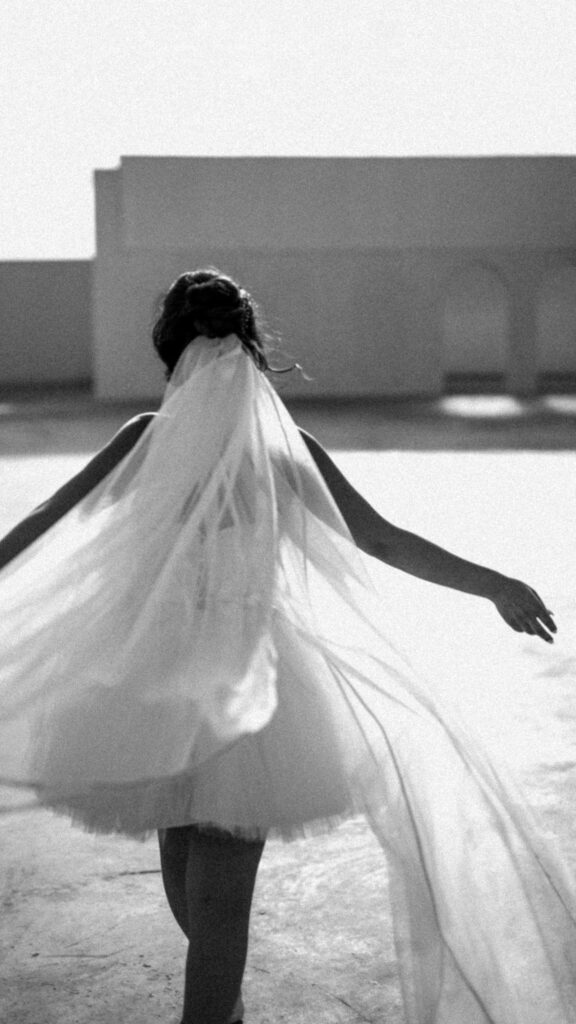
And now…I was carrying that story somewhere new.